
Hemp Loft Insulation - Natural fibre insulation for breathable loft and underfloor spaces
Hemp Insulation for Loft Spaces
Hemp insulation is a natural fibre insulation made from UK-grown industrial hemp, formed into flexible batts designed to fit between joists and structural framing within loft spaces.
Unlike more closed insulation materials, hemp has a highly breathable structure. This means it allows moisture vapour to move more freely through the material, rather than trapping it within the loft space.
This can be particularly important in older or more traditional properties, where airflow and moisture movement play a key role in how the building performs over time.
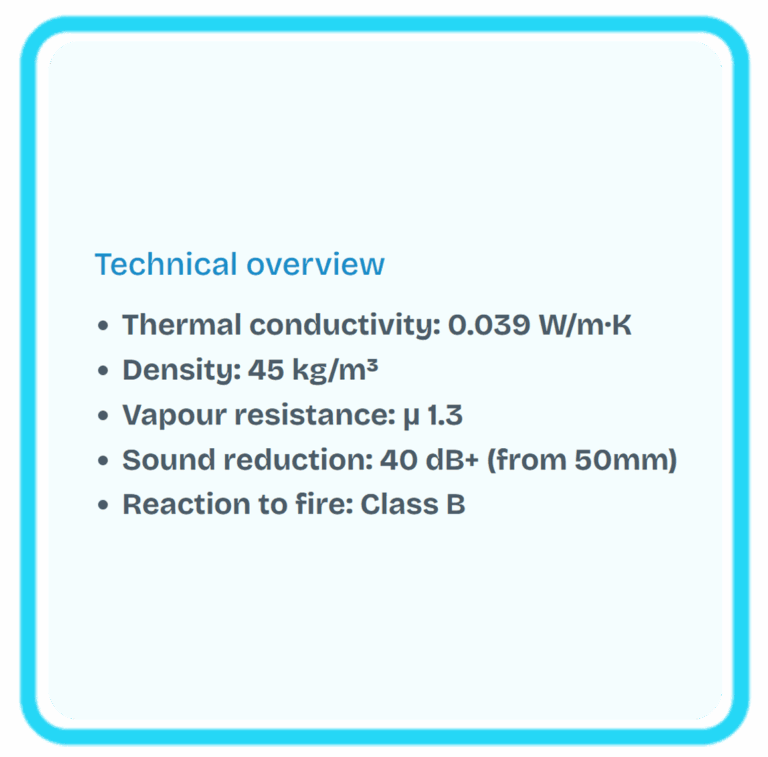
In terms of thermal performance, hemp insulation offers a similar level of insulation to traditional fibre materials, with a thermal conductivity of around 0.039 W/m·K. It also provides good acoustic absorption due to its dense fibre structure.
While hemp insulation is often associated with its environmental benefits, the material itself is only part of the picture. Like any insulation, how it performs depends on where it is used and how the overall loft system is designed.
To ensure lofts remain properly ventilated, we still recommend maintaining airflow and using solutions such as Lap Vents where required.
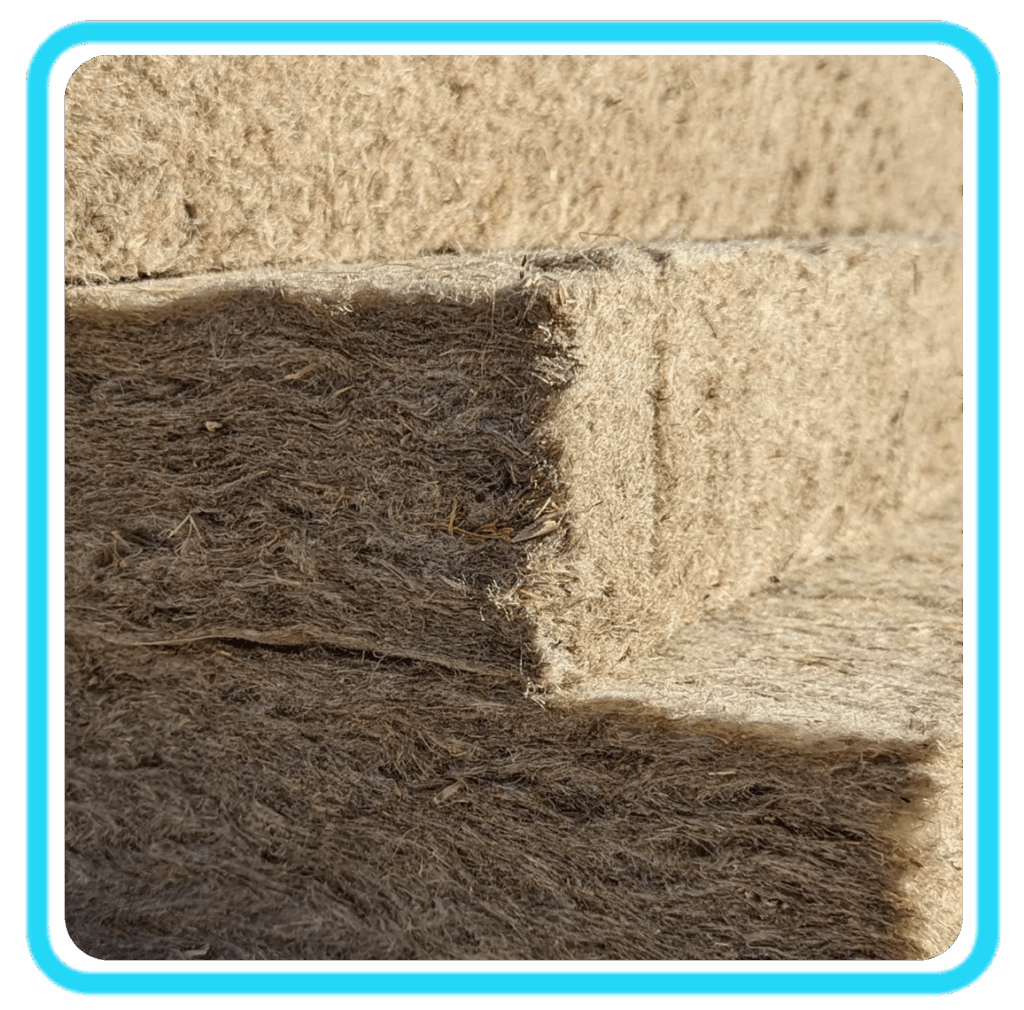
Hemp Insulation Performance
As experienced insulation installers, we use materials based on how they perform within the structure of the home, not just on headline figures.
Hemp insulation offers reliable thermal performance, with a conductivity of 0.039 W/m·K, which places it alongside traditional fibre insulation rather than high-performance reflective systems.
Where hemp differs is in how it handles moisture. With a low vapour resistance (μ 1.3), it allows moisture vapour to pass through more freely, supporting breathable loft constructions when used correctly.
Its dense fibre structure also provides good acoustic absorption, helping to reduce sound transfer through floors and ceilings where required.
In practical terms, this means hemp insulation can be a strong option in loft spaces where airflow, moisture movement, and overall building behaviour are just as important as thermal performance.
Like any insulation material, the result depends on how it is used as part of the wider system.
Not familiar with Hemp insulation?
Hemp insulation is not as widely known as materials like mineral wool, but the idea behind it is straightforward.
It is a flexible natural fibre insulation made from industrial hemp, designed to fit between joists and structural framing in lofts, walls, and floors.
In simple terms, it works in a similar way to traditional fibre insulation. It helps to slow heat loss and absorb sound, but it behaves differently when it comes to moisture.
Hemp insulation is much more breathable than many conventional materials. Instead of trapping moisture within the structure, it allows vapour to move more freely. This can be important in loft spaces and older properties where airflow plays a key role in how the building performs.
That does not make it better than other insulation types. It simply means it has different strengths.
In the right loft setup, hemp insulation can provide a balance of thermal performance, moisture control, and acoustic absorption. In other cases, more traditional or high-performance systems may be more suitable.
Want a quick plain-English breakdown? Jump to the Hemp Loft Insulation FAQ below.
The Hemp Insulation Installation Process
Book Your Survey
During The Survey
The Installation
Aftercare
You’re Covered with an Insurance Backed Guarantee.
We include Insurance Backed Guarantees through HomePro on eligible installation services. That means your investment is protected even if the unexpected happens.

Using Hemp Insulation in Floors
While this page focuses on loft insulation, hemp can also be used within suspended timber floors as part of an acoustic insulation system.
If you’re exploring insulation options for floors, it helps to understand how different materials work together to reduce sound transfer.
Hemp Insulation FAQ
Hemp insulation is a natural fibre insulation made from industrial hemp, formed into flexible batts that fit between joists and structural framing.
It is used in lofts, walls and floors to reduce heat loss and improve acoustic performance, while also allowing moisture vapour to move more freely through the structure compared to more closed insulation materials.
Hemp insulation is not necessarily better than mineral wool. It simply has different strengths.
Both materials provide similar thermal performance, but hemp insulation is more breathable, allowing moisture to move through the structure more easily. Mineral wool is often more cost-effective and widely used.
The right choice depends on the property and how the insulation system is designed.
Yes, hemp insulation is highly breathable.
It has a low vapour resistance, which means moisture vapour can pass through the material rather than being trapped. This can be beneficial in loft spaces and older properties where airflow and moisture movement are important.
However, breathability alone does not prevent issues. Proper ventilation and system design are still essential.
Yes, hemp insulation provides good acoustic absorption.
Its dense fibre structure helps reduce airborne sound travelling through floors and ceilings, making it a useful option in both loft and underfloor applications where sound transfer is a concern.
Hemp insulation can be installed in a range of areas, including lofts, walls and suspended timber floors.
In loft spaces, it is typically installed between joists or within breathable roof structures. It is most suitable where airflow, moisture movement and overall building behaviour need to be considered alongside thermal performance.
Request A Survey
Book Your Free Insulation Survey Today
Call us on 0800 002 9558
Email us at info@carbonzerosolutions.co.uk

© 2025 Carbon Zero Solutions Ltd — trading as The Insulation Guys. All rights reserved.
Where We Work
We operate nationwide across the UK, with the counties below representing just some of the areas we cover. Click any county to see full details on our Areas We Cover page.
* London projects are taken on a case-by-case basis depending on size and cost-effectiveness.
*Carbon Zero Solutions Ltd is an Introducer Appointed Representative (Financial Services Register No. 1032760) of Phoenix Financial Consultants Limited (Phoenix). Phoenix is a credit broker, not a lender. Phoenix is authorised and regulated by the Financial Conduct Authority (FRN: 539195), and offers finance from its panel of lenders. All finance subject to status and credit checks.